
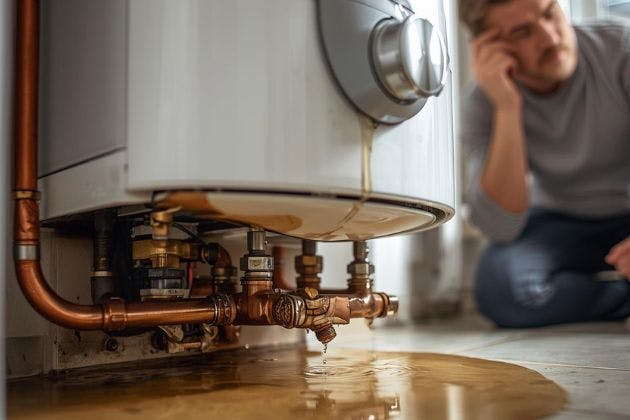
A boiler leaking water is never something to ignore, even if the leak appears small at first. Boilers are sealed and pressurised systems, so any escape of water usually indicates a fault that needs attention. Left unresolved, a leak can cause damage to surrounding flooring, cupboards, or walls, reduce heating efficiency, and in some cases lead to complete boiler failure. Understanding what actions to take and what the leak may mean can help you protect both your home and your heating system.
How to respond safely when your boiler is leaking water
Switch the boiler off immediately to reduce pressure
As soon as you notice water around your boiler, switch it off using the main controls. A running boiler continues to heat water and circulate it under pressure, which can force more water out through damaged seals, valves, or internal components. Turning the boiler off allows the system to cool and relieves internal pressure, helping to slow or stop the leak.
If your boiler continues running while leaking, internal parts such as the heat exchanger, pump, or electrical connections may be exposed to water, increasing the risk of breakdown or corrosion. Acting quickly at this stage can prevent a manageable repair from becoming a more serious fault.
Isolate the electrical supply for added safety
Once the boiler is switched off, isolating the electrical supply is strongly recommended if it is safe to do so. Most boilers are connected to a fused spur switch located nearby. Water and electricity do not mix, and isolating the power reduces the risk of short circuits, blown fuses, or damage to the control board.
This step is especially important if the leak is persistent or if water is dripping close to wiring, sockets, or the boiler casing. Electrical faults caused by water exposure can be costly to repair and may prevent the boiler from restarting even after the leak is fixed.
Shut off the water supply if leaking continues
If water continues to escape from the boiler after it has been switched off, isolating the water supply can help limit further damage. Many boilers have isolation valves on the flow and return pipes, usually controlled with a flat-head screwdriver or a small lever. Turning these valves off stops fresh water from entering the system.
Isolating the water supply is particularly useful if the leak is caused by a failed valve, cracked component, or pipework fault. It helps prevent flooding and protects nearby flooring, cupboards, and walls while you wait for professional assistance.
Contain the leak and protect your property
While waiting for an engineer, take steps to manage the water safely. Place buckets, trays, or towels beneath the leak to catch dripping water and reduce the spread. If your boiler is housed in a cupboard, remove stored items and ensure the area is well ventilated.
Even small amounts of water can damage laminate flooring, skirting boards, or plasterwork if left to soak. Containing the leak early reduces the risk of secondary damage that may otherwise add to repair costs.
Check the boiler pressure and system behaviour
After switching everything off, look at the boiler pressure gauge. High pressure can cause water to be released through the pressure relief valve, leading to visible leaks through an external pipe. Low pressure, on the other hand, often indicates ongoing water loss somewhere within the system.
Make a note of the pressure reading before the engineer arrives. This information can help identify whether the issue is related to pressure regulation, a failed expansion vessel, or an internal component fault.
Look for visible external leaks without opening the boiler
Inspect any exposed pipework, joints, and valves around the boiler for signs of dripping or dampness. Water can sometimes travel along pipes before dripping down, making the source less obvious at first glance. Checking carefully can help determine whether the issue is external pipework or internal to the boiler.
Do not remove the boiler casing or attempt to access internal parts. Boilers are sealed systems, and internal access should only be carried out by qualified engineers. Interfering with internal components can be unsafe and may affect manufacturer warranties.
Avoid restarting the boiler even if the leak stops
In some cases, leaks appear to stop once the boiler has been switched off and the system has cooled. However, restarting the boiler too soon can cause the leak to return or worsen as pressure and temperature increase again. Using a leaking boiler can also accelerate wear on already damaged components. It is always safer to wait for a professional inspection rather than risk further damage by restarting the system.
Observe warning signs and record useful information
Before the engineer arrives, note any unusual noises, error codes, or recent changes in boiler performance. Issues such as banging, whistling, frequent pressure loss, or inconsistent heating can all provide clues about the underlying cause of the leak. Providing this information helps the engineer diagnose the issue more efficiently and may reduce the time required to complete the repair.
Keep the area safe and undisturbed
Ensure children and pets are kept away from the boiler area while it is leaking or switched off. Wet floors, exposed wiring, or open cupboards can pose safety risks. Keeping the area clear also prevents accidental interference with isolation valves or controls.
Boiler leak repairs and support in Coldfield, Tamworth, Solihull and Birmingham
If your boiler is leaking water, AllForProperty Limited provides reliable support for homeowners across Coldfield, Tamworth, Solihull and Birmingham. Our experienced engineers can identify the cause of the leak, carry out safe repairs, and advise on preventing future issues. Call us on 0121 405 0404 or fill out our contact form to schedule an inspection and get your heating system back to normal.